Front desk
Insurance checked and approvals requested before the visit. Patients hear their share up front.
 CleanpassAI revenue cycle for Saudi hospitals
Open Cleanpass
For Saudi hospitals · Arabic + English · NPHIES-style FHIR
Cleanpass reads every clinical note, predicts which claims an insurer will deny, fixes what is safe to fix, and sends the rest to the right person with the evidence ready. Front desk to final payment, in one platform.
Each visitor gets a private synthetic hospital for 24 hours. No real patients; fictional insurers.
Synthetic hospital and insurers; every number is measured, and the assumptions are on this page.
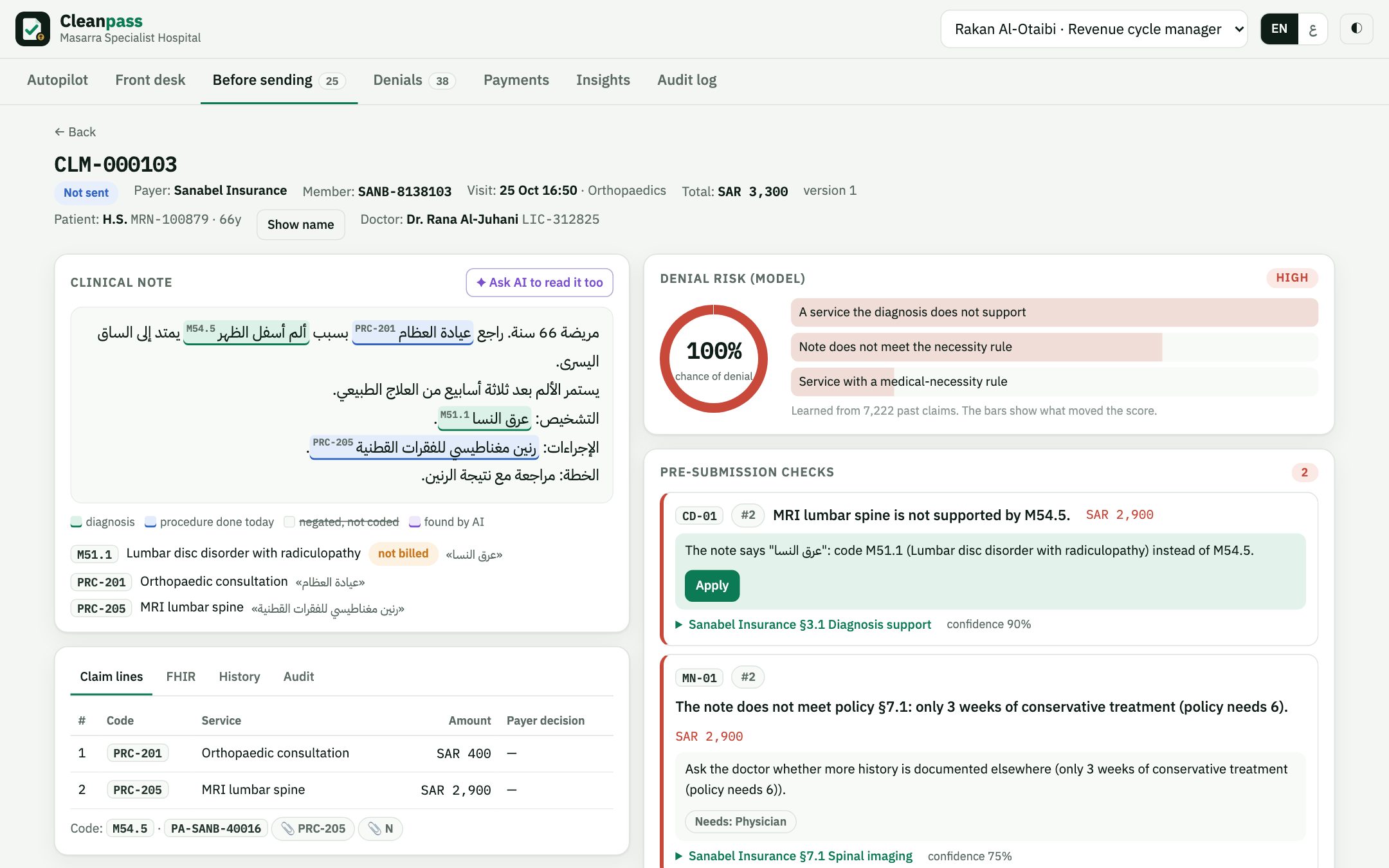
Most denials are decided before a claim is ever written. Cleanpass works at every step, with the same payer rules, the same model and the same safety checks.
Insurance checked and approvals requested before the visit. Patients hear their share up front.
Arabic and English notes coded; every code quotes the words behind it. AI reads what rules miss.
Every payer rule, plus a model trained on past claims that learns what the rules miss.
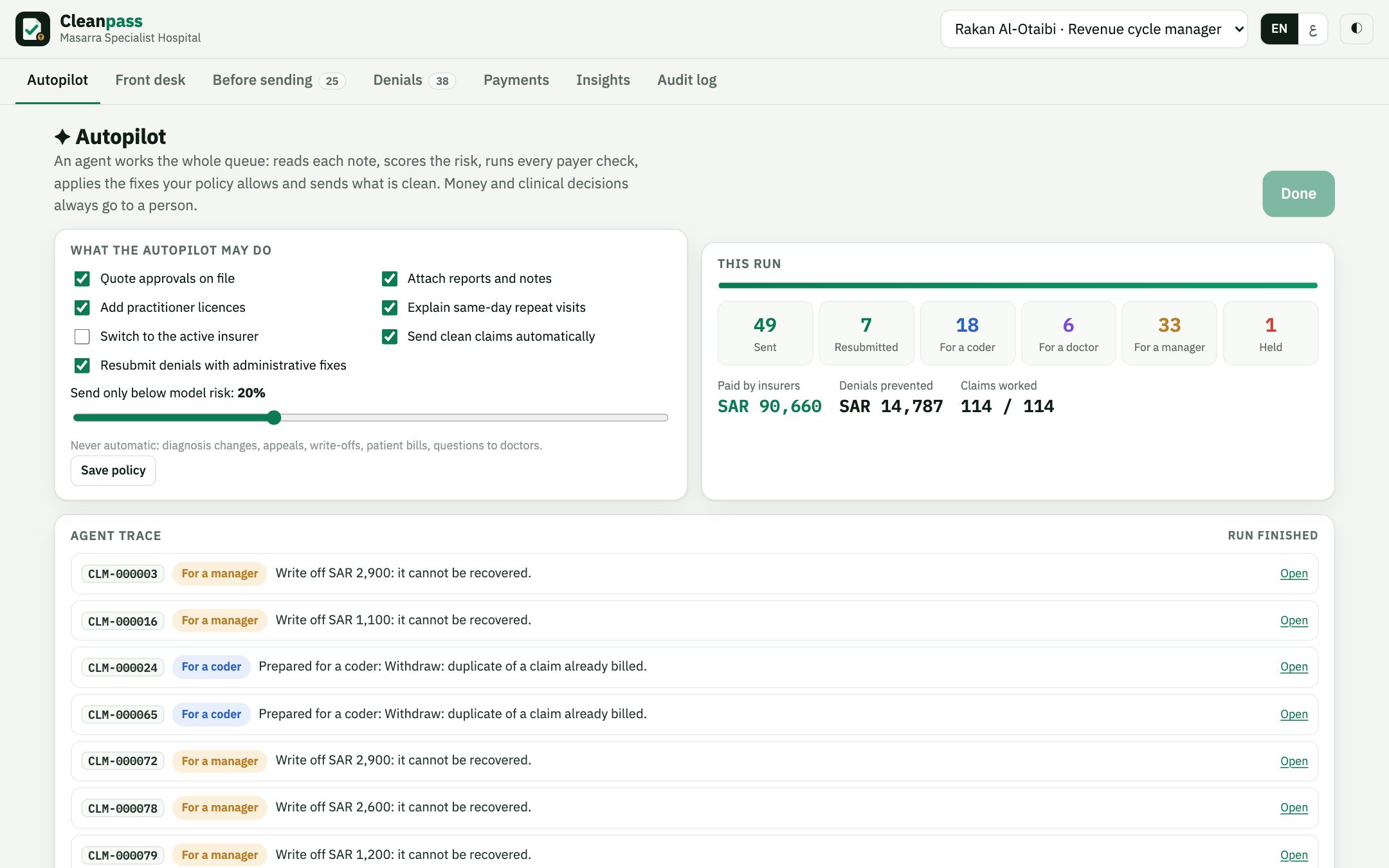
An agent works the queue under a manager's policy. People get only the decisions that need them.
Each denial triaged: the fix or the appeal letter, who signs, what it recovers, days left.
Remittances matched to the agreed prices. Underpaid, missing and double payments caught.
It learns. Denials no published rule explains are pooled; when a pattern repeats, Cleanpass proposes a new check and a manager approves it. Root causes point at what to fix upstream.
Real screens from a hospital workspace with synthetic data. Open one yourself and every button works.
Agent, with guardrails
One click works the whole queue. It reads the note, scores the risk, runs every payer check, applies only the fixes the manager's policy allows, re-checks, and sends what is clean. Everything else lands with the right person, prepared.
Machine learning you can explain
Trained on six months of claim history and tested on the month after. Every score shows the factors that moved it, and it learned insurer habits no published policy describes.
September's claims for a synthetic three-department hospital, through the same strict insurer: once the way the hospital works today, once with Cleanpass. The team, payer and deadlines are identical; only prevention, speed and ordering differ.
A model may suggest; only plain code decides what reaches an insurer. Every rule is checked again when the action runs, so no screen and no agent can skip it.
A diagnosis changes only if the note states it, word for word and not negated. AI suggestions that quote words not in the note, or describe a different code, are dropped.
Coders correct; managers write off and bill patients; only a doctor signs a medical-necessity appeal; finance sees everything and changes nothing.
No resubmitting duplicates or claims past the deadline, no prices above the agreed list, no added services. Each submission runs once, by idempotency key.
Screens show initials and record numbers. Viewing a full name is logged. Notes stay on the server, and the truth used for scoring never leaves it.
Lines that try to instruct the system ("ignore previous instructions", "تجاهل التعليمات") are flagged in red and never coded.
Every fix, approval, submission, autopilot step, AI call and name view is recorded with who, when and what.
Scored against the synthetic hospital's hidden truth. The build fails if any gate is missed.
A plain TypeScript engine with no platform code, wrapped in a Cloudflare Worker. Running cost: $0 on free tiers.